
 BOD2
BOD2 COBODHigh-speed gantry printer for real-concrete walls up to 8 meters18 deployments · 7 countries

Arm-mounted 3D concrete printer that prints structural walls up to two stories on site
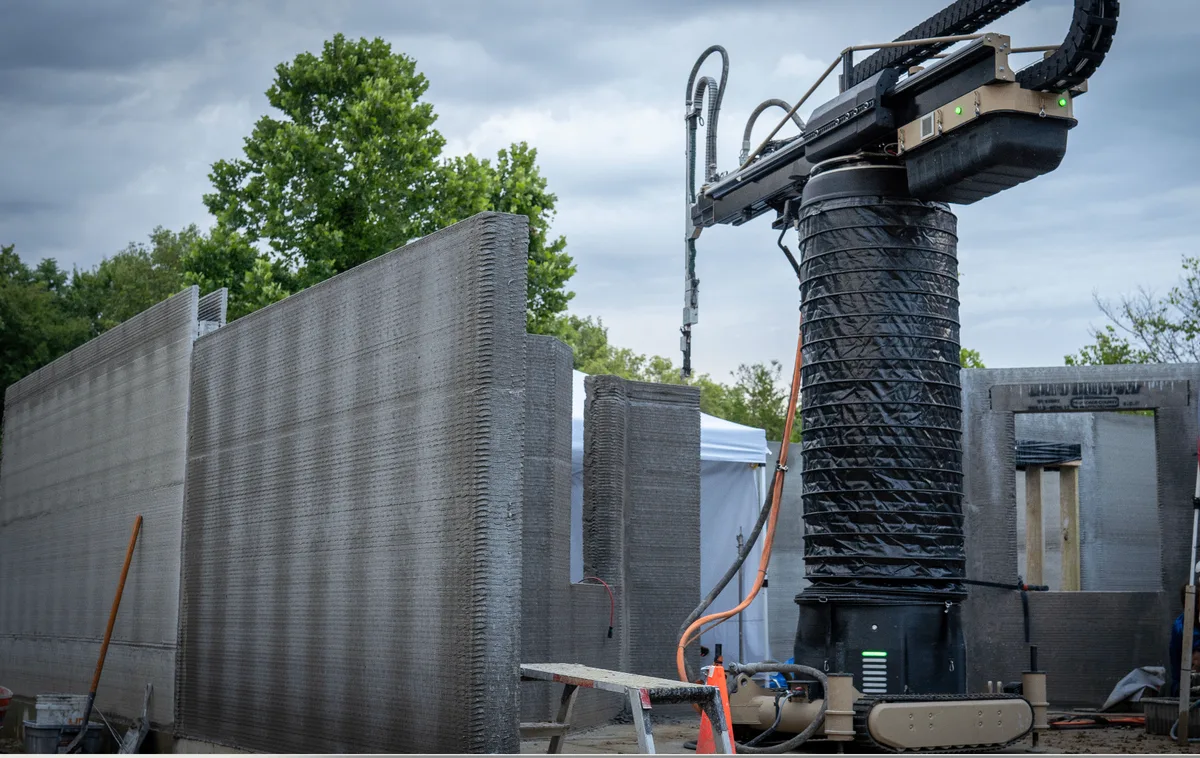
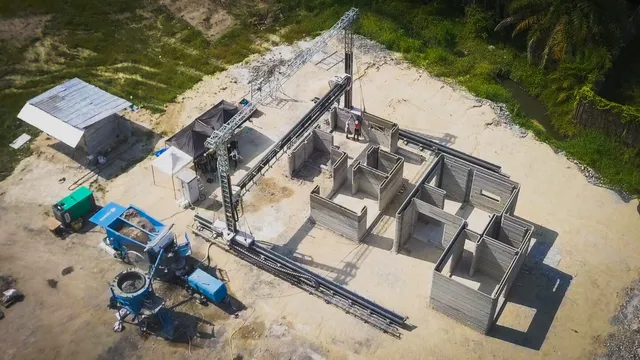
The Apis Cor system is an arm-mounted 3D concrete printer that deposits structural walls on site using a three-unit setup: Frank (printer), Gary (mixer), and Mary (material feeder). It prints walls up to two stories using layer-by-layer cementitious deposition; foundations, roofing, MEP, and finishes remain conventional construction. The system has been shipping since 2017.
Frank prints structural walls up to two stories by depositing cementitious material layer by layer. Walls use standard CMU reinforcement and connection details. For buildings larger than the single-setup footprint, Frank repositions between sections on continuous tracks and recalibrates at each new position. Remote operation across time zones has been demonstrated, with an operator controlling a print from a different state.
The Mary subsystem handles material intake and eliminates manual mixing and heavy lifting from the crew's scope. Gary adapts material flow and mix quality to real-time conditions during printing. Material composition varies by region: cement-based in U.S. projects, gypsum-based for work in the Gulf region.
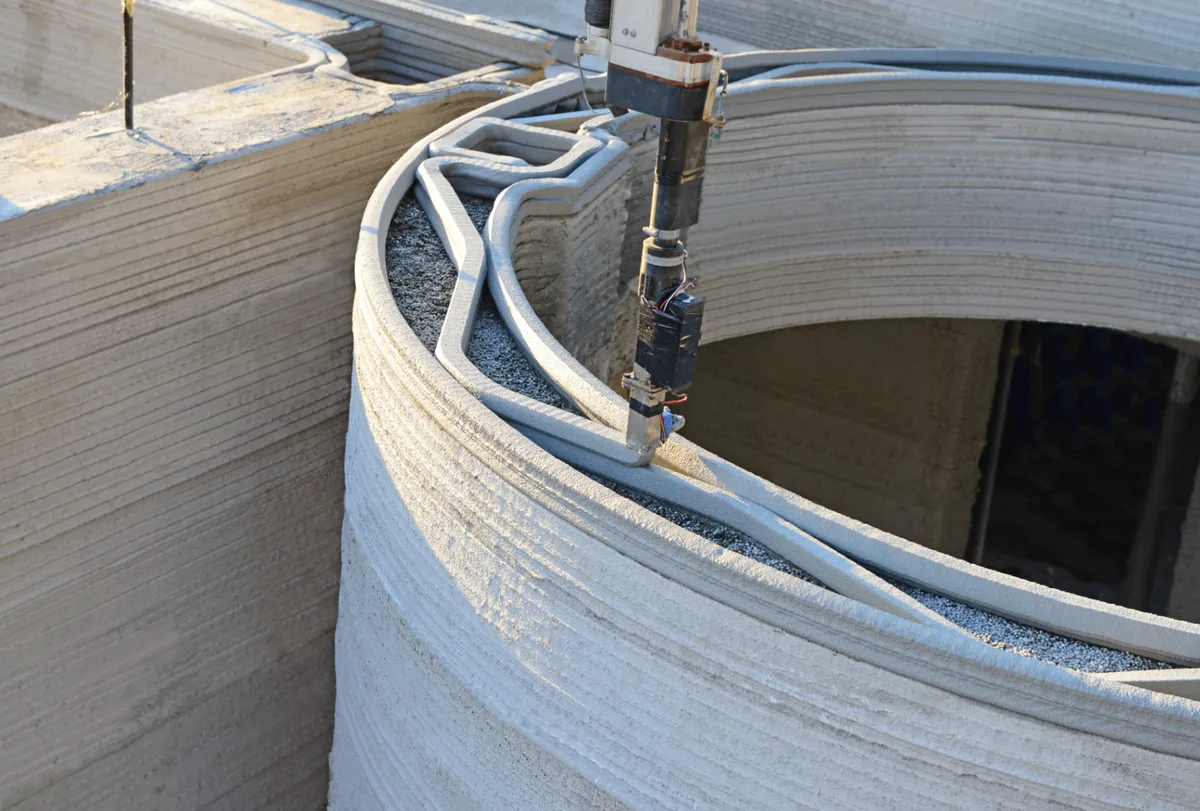 Image: Apis CorImage: Apis CorImage: Apis CorImage: Apis CorImage: Apis Cor
Apis Cor (Frank/Gary/Mary system) D.R. Horton
7 deployments · 4 companies · 2 countries
As the maker states it.
BOD2COBODHigh-speed gantry printer for real-concrete walls up to 8 meters18 deployments · 7 countries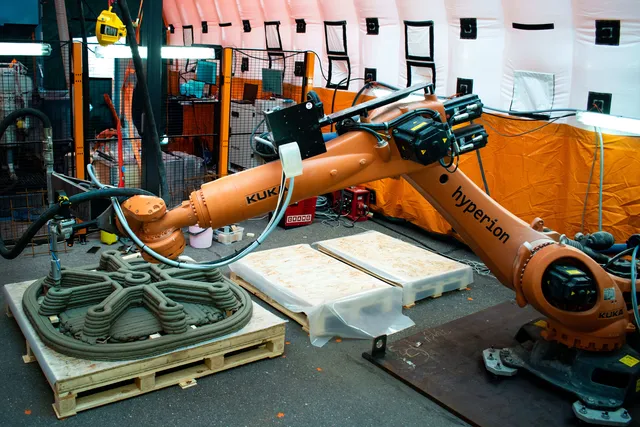 Photo: Hyperion RoboticsHyperion RoboticsHyperion RoboticsRobot-arm cell that extrudes concrete into prefabricated elements in an off-site factory7 deployments · 3 countries
 Titan (MK1/T27) / Vulcan (Block 4)
 ICONLarge-format diesel-powered concrete wall printer with 21-meter reach8 deployments · 1 country
Something wrong? How corrections work