





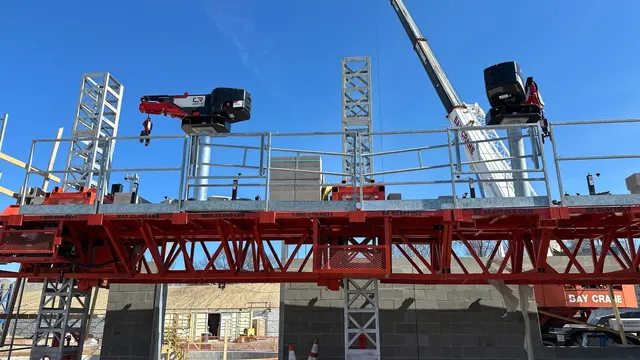
 Image: Construction roboticsMULE MZ100
 Construction RoboticsTeleoperated lift-assist arm that carries the weight of masonry blocks up to 100 lb during placement3 deployments · 1 country
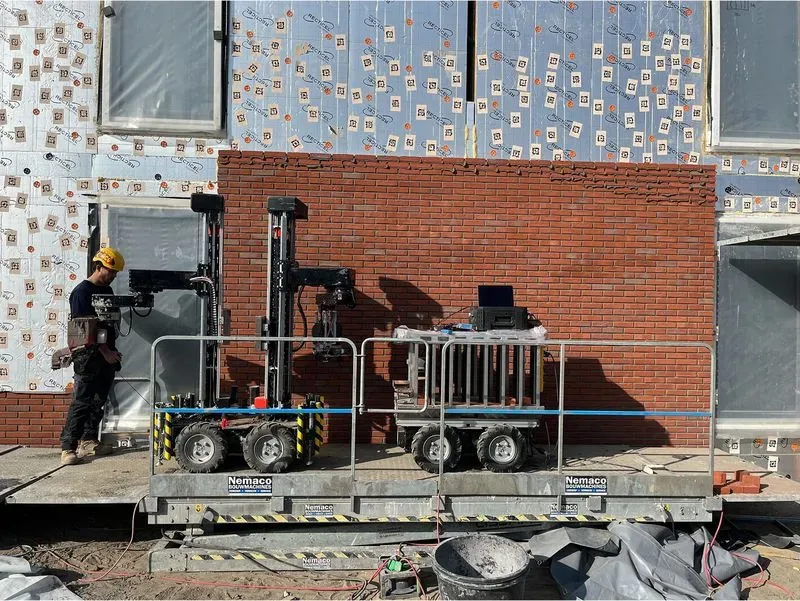 Image: Monumental
Battery-powered autonomous bricklayer for facades and structural walls
The Monumental is a compact, wheeled, battery-powered bricklaying robot that operates as part of a three-machine team: one bricklaying unit with two arms (mortar and brick) plus two support robots for material transport. It places bricks autonomously using camera-based localization against a digital twin, covering facade construction, retaining walls, and standard masonry; pointing, wall ties, and finishing stay with a human bricklayer on site. Monumental has been shipping since 2023.
Monumental's robots build the corners of a wall along with the straight runs, following the bond pattern and leaving the gap where a window frame goes. The robot stops where a lintel is needed, and a mason steps in to set it.
The bricklaying arm places each brick in world-space coordinates, cross-referencing camera input with the digital twin. Integrated cameras monitor every placement and self-correct; the system detects bricks under partial obstructions, shadows, and glare. A human bricklayer handles mortar pointing and wall ties, tasks the robot does not perform.
Image: MonumentalMonumental
Image: MonumentalMonumental
Image: MonumentalMonumental
Image: MonumentalMonumental Pellikaan
Image: MonumentalMonumental
15 deployments · 7 companies · 2 countries
As the maker states it.
Image: Construction roboticsMULE MZ100Construction RoboticsTeleoperated lift-assist arm that carries the weight of masonry blocks up to 100 lb during placement3 deployments · 1 country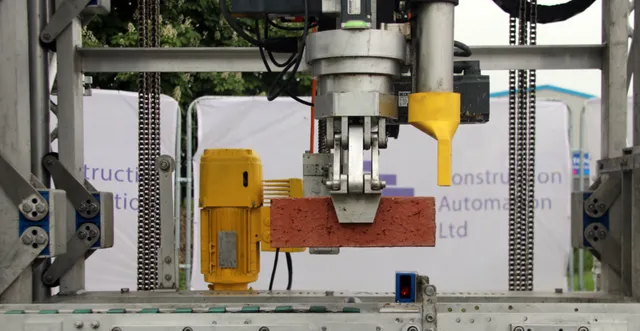 Image: Construction Automation LtdABLR
 Construction AutomationTrack-guided perimeter bricklayer built around full residential house footprints3 deployments · 1 country
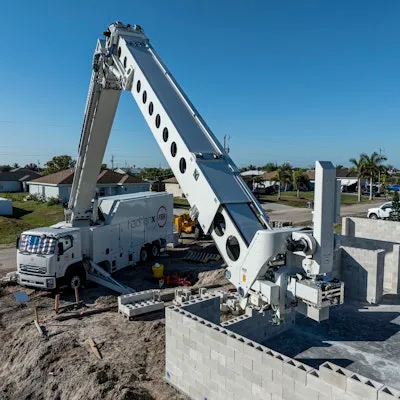 Image: FBR LtdHadrian X
 FBRTruck-mounted 32-meter boom layer for structural block walls16 deployments · 3 countries
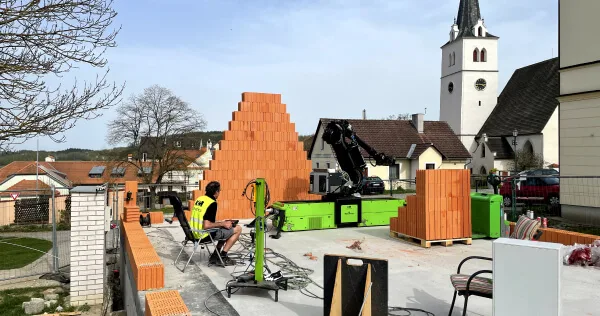 Image: GreenBuildWLTR Masonry Robot
 GreenBuild s.r.o.Tablet-controlled bricklayer for straight Porotherm walls up to 3.5 meters10 deployments · 5 countries
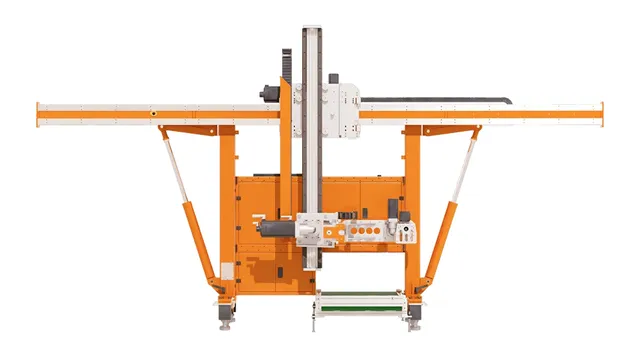 Buildroid
 BuildroidBIM-driven multi-robot block-laying crew for low-rise masonry walls4 deployments · 2 countries
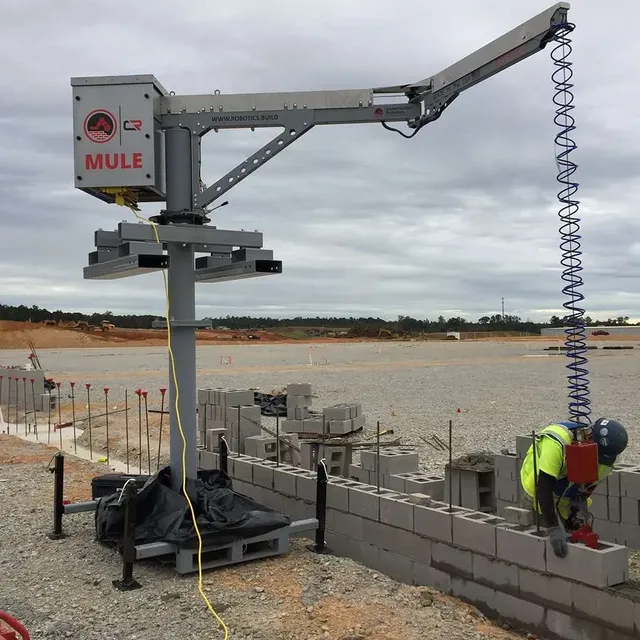 Mule ML150Construction RoboticsMast-mounted lift assist for placing heavy CMU blocks2 deployments · 1 country
Something wrong? How corrections work