


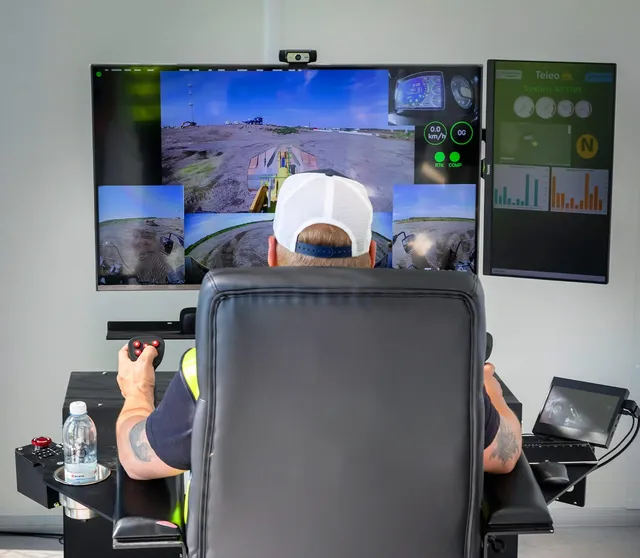
 Teleo Supervised Autonomy
 TeleoBrand-agnostic supervised autonomy retrofit for heavy earthmoving fleets; one operator, multiple machines12 deployments · 4 countries
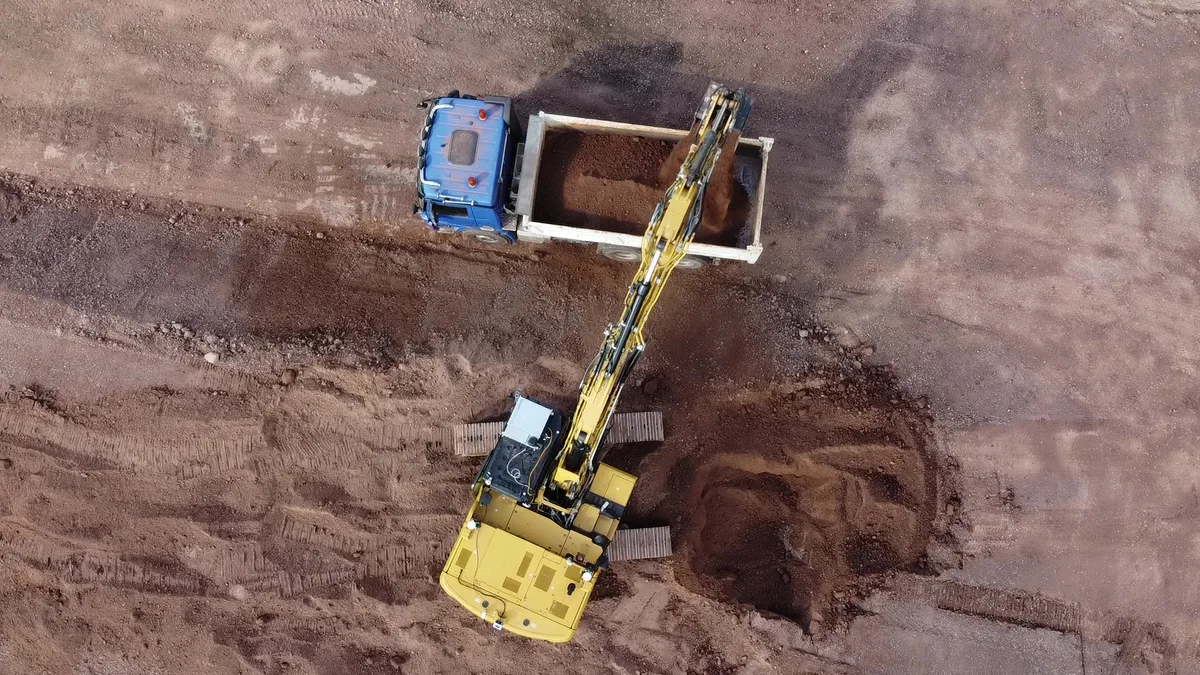

Retrofit autonomy kit for excavators and wheel loaders; bucket-based earthmoving tasks
The Gravis RACK is a rooftop-mounted retrofit autonomy kit that converts existing excavators and wheel loaders (10 to 100+ tonnes) into supervised-autonomous earthmoving machines. It handles repetitive bulk excavation cycles, utility trenching to pipelaying standards, and hopper feeding; complex geometry work, grading, and non-bucket tasks stay with the operator. One qualified operator programs trench geometry on a tablet, steps out of the cab, and the machine delivers fifteen trenches to pipelaying standards on a live construction site (NCE, Manchester Airport deployment). The RACK has shipped since 2025 across seven countries, with deployments spanning quarrying, commercial construction, and pipeline operations on machines from seven confirmed OEM brands.
The RACK runs autonomous dig-swing-dump-return cycles on repetitive bulk tasks. The system reads hydraulic pressure to detect soil hardness and adjusts excavation strategy across varying ground conditions. Operators define jobs from a CAD/BIM model or on-site reference points through the Slate tablet; the machine executes while the operator monitors from outside the cab.
The RACK digs trenches to a programmed geometry, navigating around subsurface pipes without human intervention. The operator defines trench dimensions on the Slate tablet using CAD/BIM coordinates or bucket-position reference points, then steps out of the cab for the duration of the autonomous cycle. A 5-week refinement period preceded pipelaying-standard output on the first documented construction site.
Gravis RACK Taylor Woodrow
Gravis RACK
6 deployments · 4 companies · 2 countries
As the maker states it.
Teleo Supervised AutonomyTeleoBrand-agnostic supervised autonomy retrofit for heavy earthmoving fleets; one operator, multiple machines12 deployments · 4 countries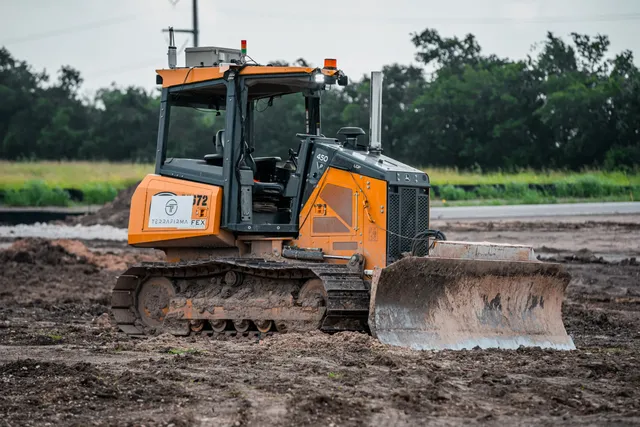 Image: TerraFirma, Inc.TerraFirma Autonomous Earthmoving Platform
 TerraFirmaRetrofit kit that makes excavators, dozers, loaders and graders remote-operated or semi-autonomous6 deployments · 1 country
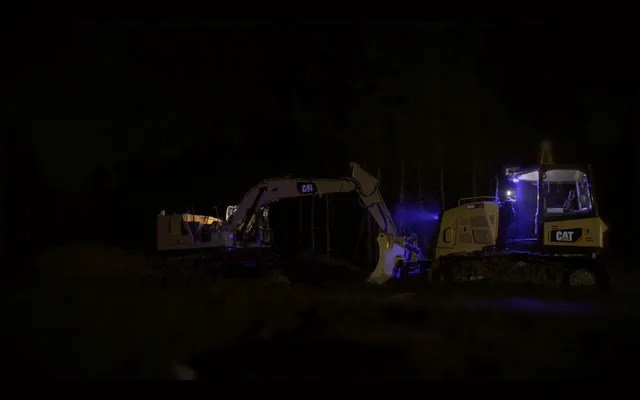 AIM Platform
 AIMFully autonomous earthmoving retrofit; bulldozers and excavators, zero-entry worksites5 deployments
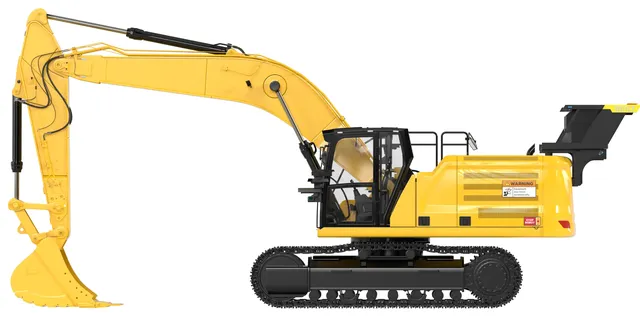 Exosystem
 Built RoboticsAftermarket excavator retrofit for autonomous utility trenching on solar and energy sites4 deployments · 2 countries
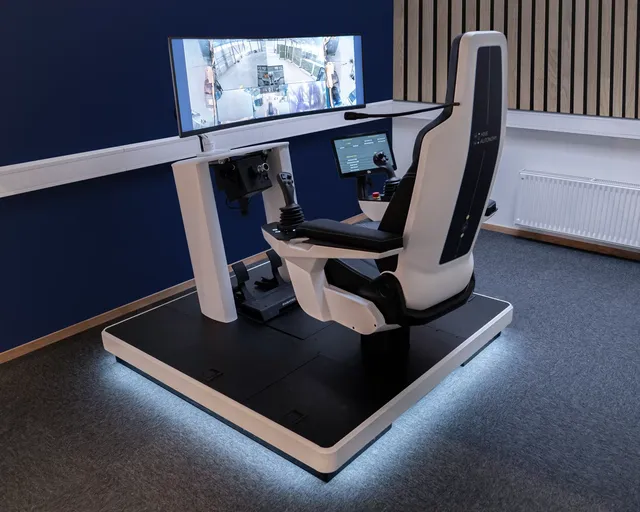 Hive Machine Intelligence Equipment
 HIVE5G-dependent retrofit kit for remote-operated loaders and excavators3 deployments · 1 country
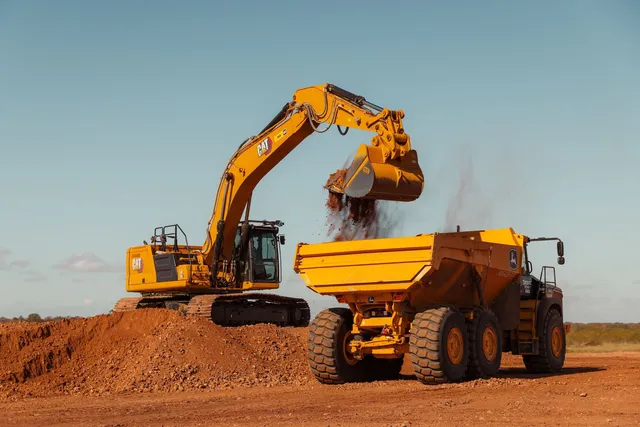 Image: Bedrock RoboticsBedrock Operator
 Bedrock RoboticsRetrofit autonomy kit for excavators covering grading, excavation, backfill, and hauling5 deployments · 1 country
Something wrong? How corrections work