




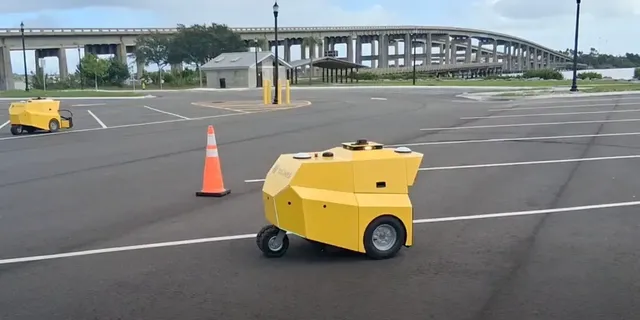
 Image: 10Lines10Lines
 10LinesAutonomous parking lot striper with integrated glass bead dispensing7 deployments · 2 countries
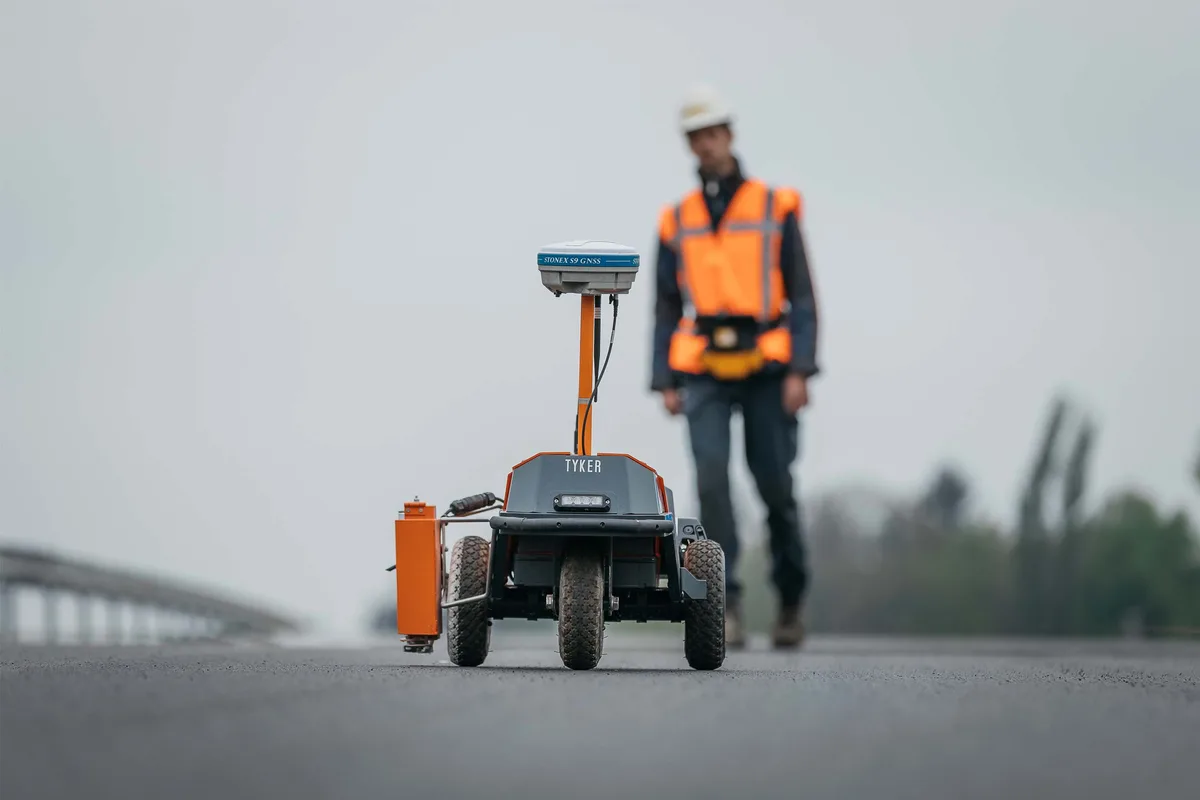
GNSS-guided road premarking robot for highway and tunnel layout
The Robot Plotter is a 21 kg wheeled robot that autonomously marks lines and survey points on road surfaces, airport pavements, and tunnel floors from pre-loaded digital drawings. It covers layout and measurement within the roads and pavements job, using RTK-GNSS or Total Station positioning to execute marking patterns while one operator supervises from outside the active work zone. The Robot Plotter has shipped since 2018 from the Netherlands, with distributors in seven countries.
The Robot Plotter loads a DXF drawing, locks onto RTK-GNSS or Total Station positioning, and drives the marking pattern autonomously while the operator stays off the road surface. A drilling module (optional, launched February 2023) handles borehole reference marking on concrete; the base unit handles paint lines on asphalt and tunnel floors. The survey crew's exposure to active traffic is eliminated for premarking tasks.
Robot Plotter Heijmans
Robot Plotter
As the maker states it.
Image: 10Lines10Lines10LinesAutonomous parking lot striper with integrated glass bead dispensing7 deployments · 2 countries Robotic PreMarker
 WJ GroupLightweight GNSS premarking robot for UK motorway centre-line layout6 deployments · 1 country
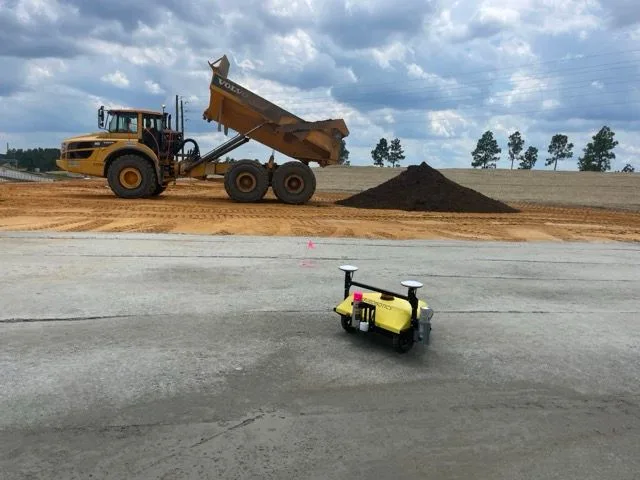 Image: Civ RoboticsCivDot Mini
 Civ RoboticsHandheld-scale GNSS layout marker for road and highway premarking2 deployments · 1 country
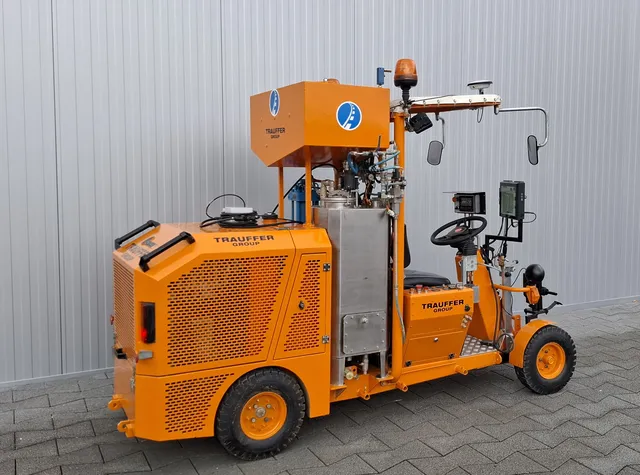 Image: TykerAutostriper
 TykerAdd-on kit that takes over the steering of an existing road marking machine0 deployments
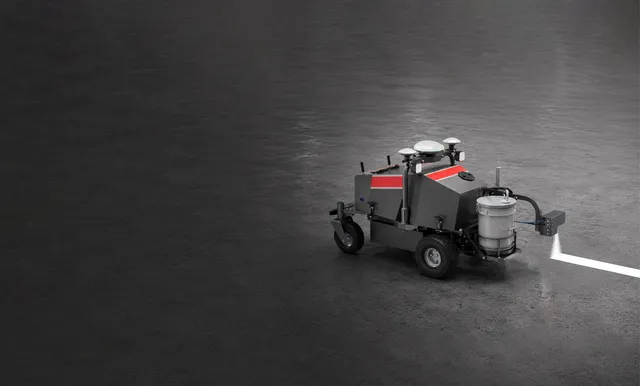 Image: FJDynamicsFJD PaintMaster ParkingFJDynamics210 kg battery-powered striping robot that sprays parking-lot lines0 deployments
Something wrong? How corrections work