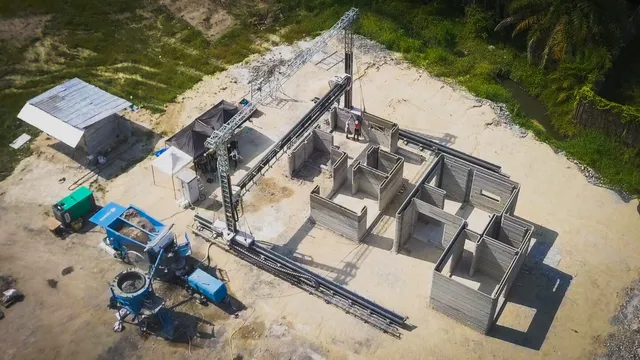
 BOD2
BOD2 COBODHigh-speed gantry printer for real-concrete walls up to 8 meters18 deployments · 7 countries
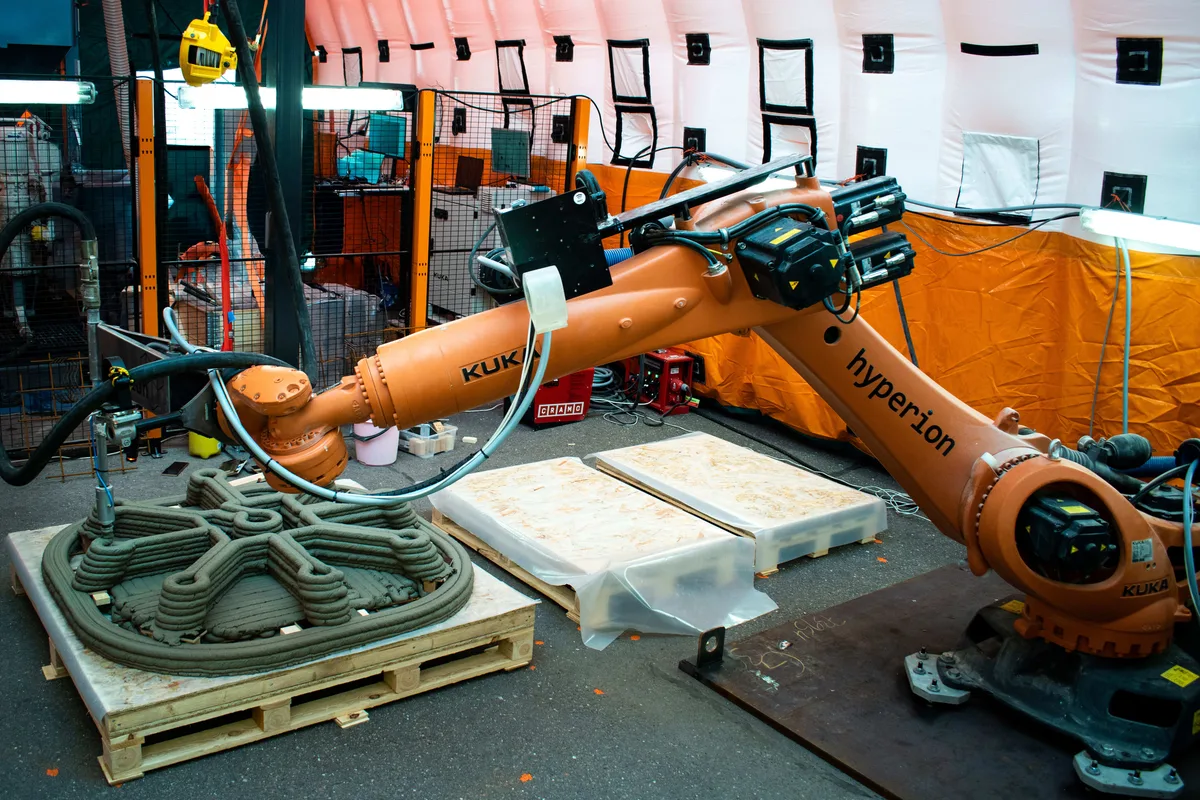 Photo: Hyperion Robotics
Robot-arm cell that extrudes concrete into prefabricated elements in an off-site factory
Hyperion Robotics runs arm-mounted robotic printing cells that extrude concrete layer by layer into the shells of foundations, drawpits, chambers and pipe-support sleepers. Each printed shell is permanent formwork, with a rebar cage placed inside and cast with conventional concrete; printing happens in Hyperion's own factories, and elements ship to site as prefabricated units. At Esholt wastewater treatment works, a 2.2 m circular printed drawpit took the place of a 5.2 m square in-situ design, and the element printed in two hours. Hyperion is shipping and sells the printed elements only, keeping the robots in its own factories.
Layer Deposition (Printing)
Photo: Hyperion Robotics
Photo: Hyperion RoboticsPhoto: Hyperion RoboticsPhoto: Hyperion RoboticsPhoto: Hyperion RoboticsAs the maker states it.
BOD2COBODHigh-speed gantry printer for real-concrete walls up to 8 meters18 deployments · 7 countries Apis Cor (Frank/Gary/Mary system)
 Apis CorArm-mounted 3D concrete printer that prints structural walls up to two stories on site7 deployments · 2 countries
 Titan (MK1/T27) / Vulcan (Block 4)
 ICONLarge-format diesel-powered concrete wall printer with 21-meter reach8 deployments · 1 country
Something wrong? How corrections work